What Does a Gardener Actually Do in Late Summer?
By late summer, the garden can look as though it's doing perfectly well without much help.
The borders are full, many plants are still flowering, trees and shrubs are leafy and there may not be the obvious rush of jobs that comes with spring.
But August and early September are actually an important time in the garden.
A good gardener isn't simply looking at what needs doing today.
They're also noticing what has worked this year, what is struggling, what has become too large and what needs attention before autumn and winter arrive.
So what does a gardener actually do in late summer?
1. Keep on Top of Weeds - Before They Seed Everywhere
By late summer, some weeds have become remarkably ambitious.
Removing them before they set seed can save an enormous amount of work later.
But that doesn't mean indiscriminately clearing every plant that has appeared by itself.
Some self-seeded plants can be valuable additions to a garden, while others will quickly take over if they're allowed to spread.
The trick is knowing what you're looking at before you pull it out.
2. Deadhead Plants That Will Continue Flowering
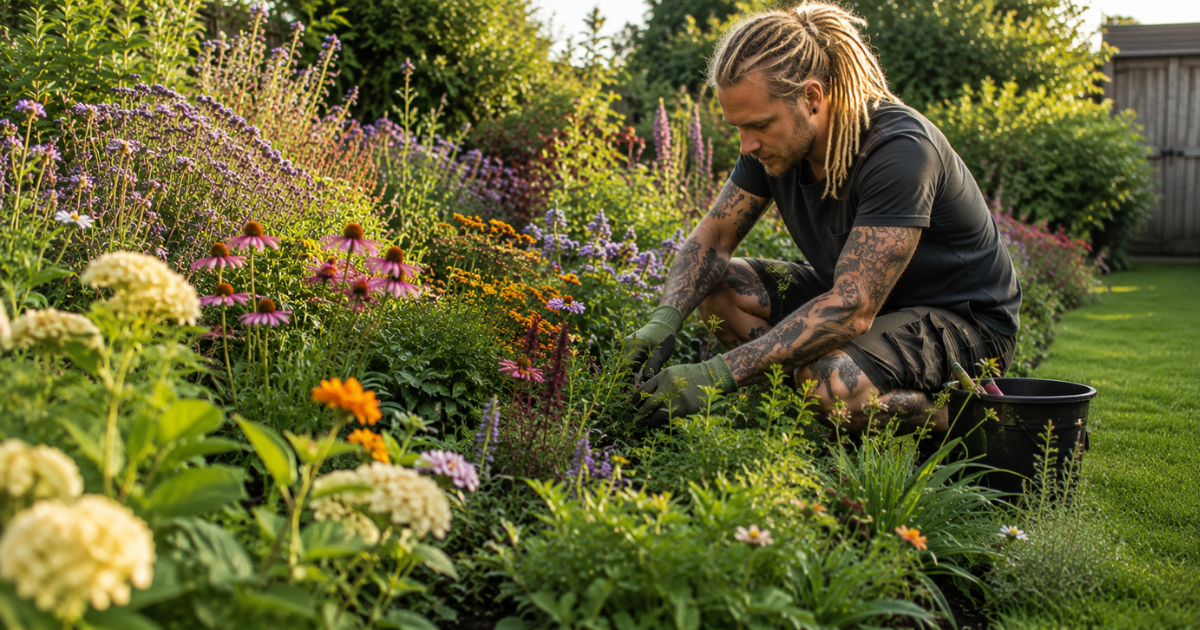
Many flowering plants will keep producing blooms well into late summer and early autumn if spent flowers are removed.
Deadheading can help direct the plant's energy towards producing more flowers rather than seed.
But again, not everything needs to be deadheaded.
Some seed heads are attractive in their own right and provide food for birds later in the year.
Others add structure to the garden through autumn and winter.
Sometimes leaving the secateurs in the tool bag is part of the job.
3. Prune the Plants That Need It - Not Everything in Sight
Late summer can be an appropriate time to prune certain plants, particularly once they've finished flowering.
But it isn't a universal invitation to give every shrub in the garden a haircut.
Different plants respond to pruning in different ways, and cutting at the wrong time can remove next year's flowers.
That's why identifying the plant comes first.
Our guide 5 Signs a Shrub Needs Pruning - and When to Leave It Alone explains some of the things we look for before deciding whether a shrub actually needs pruning.
And if you've got hydrangeas, it's particularly important to know which type you're dealing with. You can read When Should You Prune Hydrangeas? for more on that.
4. Support Plants That Have Become Top-Heavy
By August, plants that looked perfectly upright in June can suddenly be leaning across paths, neighbouring plants or the lawn.
Heavy flowers, summer rain and wind can all cause stems to flop.
Supports can help, although ideally they should be added before plants completely collapse.
Where plants repeatedly outgrow their neighbours or need substantial support every year, it may also be worth reconsidering whether they're in the best position.
5. Water Where It Actually Matters
Late summer can still bring prolonged dry periods, and simply sprinkling water across the surface isn't always enough.
Newly planted shrubs, trees and perennials generally need more attention than well-established plants with developed root systems.
Containers can dry out particularly quickly.
A good soak less frequently is often more useful than repeatedly wetting only the top layer of soil.
And before watering automatically, check the soil.
British weather is quite capable of making yesterday's watering plan completely irrelevant by lunchtime.
6. Look for Plants That Are Struggling
One of the most useful things you can do in late summer is simply observe the garden.
By now, plants have had most of the growing season to show you whether they're happy.
A plant that has struggled all summer may be:
getting too much or too little sun
competing with neighbouring plants
in soil that doesn't suit it
too dry or too wet
planted in a position it has simply outgrown
Rather than repeatedly trying to fix the symptoms, sometimes the answer is to reconsider the plant's position.
Our Garden Design & Planting service is based around choosing plants for the conditions they're actually going to live in - not simply because they looked lovely at the garden centre.
7. Notice What's Working Brilliantly
Late summer isn't only about spotting problems.
It's also one of the best times to see what's working.
Which combinations have looked fantastic?
Where has colour lasted particularly well?
Which plants have attracted bees and butterflies?
Which areas have been disappointing?
Where are there obvious gaps?
A few photographs or notes taken now can be incredibly useful when planning changes later in the year.
Because by February, remembering exactly what that border looked like in August can be surprisingly difficult.
8. Start Thinking About Autumn Planting
Late summer is a good time to begin planning what comes next.
Autumn can be an excellent time for planting many trees, shrubs and perennials because the soil is still relatively warm while temperatures above ground are beginning to cool.
That gives roots an opportunity to establish before the following growing season.
So if you've identified gaps, plants that need moving or areas you'd like to redesign, now is a useful time to start planning rather than waiting until spring.
You can also see what's coming next in our Autumn Garden Care guide.
9. Check Boundaries, Fences and Garden Structures
When the garden is full of summer growth, it's surprisingly easy to ignore what's happening behind it.
Late summer is a useful time to check fences, gates, supports and other structures.
Look for loose panels, leaning posts, damaged timber and areas of rot.
If fencing is beginning to deteriorate, dealing with it before winter weather arrives can prevent a small problem becoming a collapsed boundary.
We've covered this in When Is the Best Time to Replace a Garden Fence?.
10. Don't Tidy Away the Life in the Garden
A garden doesn't need to be stripped back to look cared for.
Late-summer flowers provide nectar for pollinators, seed heads can provide food and dense planting offers shelter to insects and other wildlife.
Good garden care is about finding the balance between keeping things healthy and manageable without removing everything useful simply because it looks slightly untidy.
That's especially important as we move towards autumn.
Late Summer Is Really About Watching and Planning
Some late-summer gardening is obvious: weeding, deadheading, watering and pruning where appropriate.
But a large part of good garden care at this time of year is observation.
What's thriving?
What's struggling?
What's getting too big?
Where are the gaps?
What needs attention before winter?
The answers help determine what happens in the garden over the next few months.
Rather than treating each visit as a completely separate list of jobs, we're looking at how the garden is developing throughout the year.
That's particularly important in mature and established gardens, where what you don't do can sometimes matter just as much as what you do.
Need Help With Your Garden?
NPK Garden Services provides Regular Garden Care for gardens in Bromsgrove and surrounding areas.
We can help with seasonal garden care, pruning, planting and established gardens — looking at what your garden needs now as well as what will help it develop over the seasons ahead.
Talk to Us About Your Garden →
You Might Also Be Interested In…
Autumn Garden Care
What your garden needs as summer gives way to autumn.
5 Signs a Shrub Needs Pruning — and When to Leave It Alone
How to tell whether an established shrub genuinely needs pruning.
When Should You Prune Hydrangeas?
Different hydrangeas need different pruning — here's how to tell when yours should be cut.
Regular Garden Care
Knowledgeable ongoing care for established gardens.
Mature & Existing Plant Care
Looking after the plants and structure that are already established in your garden.