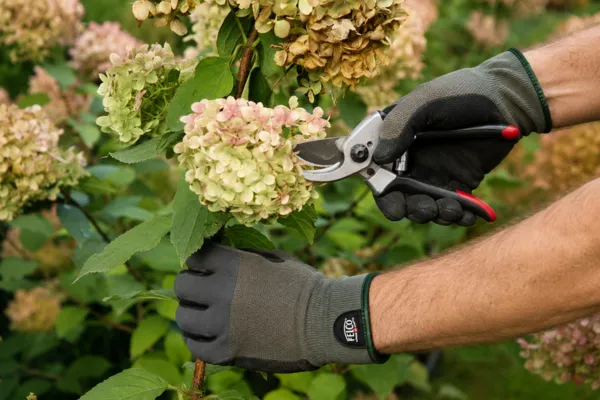
When Should You Prune Hydrangeas?
Hydrangeas are one of those plants that can leave even experienced gardeners hovering with the secateurs wondering, “Do I cut this now or leave it alone?”
And that's a sensible question.
Prune a hydrangea at the right time and you can encourage healthy growth, beautiful flowers and a well-shaped shrub.
Prune the wrong hydrangea at the wrong time and you could accidentally remove the flower buds you've been waiting all year to see.
The reason there isn't one simple pruning date is that not all hydrangeas flower in the same way.
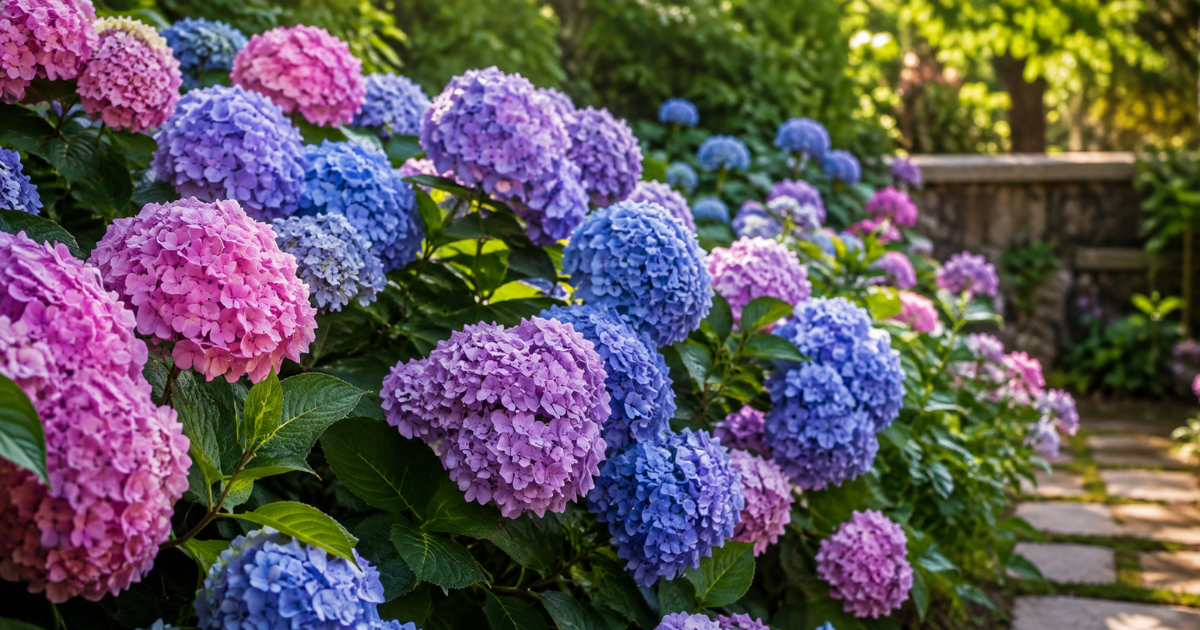
First: Which Hydrangea Do You Have?
Before you prune anything, identify the type of hydrangea growing in your garden.
Some hydrangeas produce their flowers on old wood — stems that grew during the previous year.
Others flower on new wood produced during the current growing season.
That distinction determines when and how they should be pruned.
This is why we always prefer to understand the plant in front of us before we start cutting.
When Should You Prune Mophead and Lace Cap Hydrangeas?
The familiar mophead hydrangeas, with their large rounded flower heads, and lace caps, with their flatter flowers, are usually Hydrangea macrophylla.
These generally flower on growth produced the previous year.
For established plants, the main pruning is usually done in spring, once the worst of the cold weather has passed and new growth is beginning to appear.
The old flower heads can actually provide some protection to the developing buds beneath them during winter, so there's no need to rush out in autumn and remove them all.
In spring, old flower heads can be cut back carefully to a strong pair of healthy buds.
Any dead, damaged or very weak stems can also be removed.
On older, congested plants, some of the oldest stems can sometimes be taken out from the base to encourage fresh growth and improve the overall structure.
The important thing is not to cut the entire shrub hard back every year.
Do that to a traditional mophead or lace cap and you may remove much of the growth carrying that year's flowers.
When Should You Prune Panicle Hydrangeas?
Panicle hydrangeas - Hydrangea paniculata - behave differently.
Popular varieties include plants such as 'Limelight' and 'Vanille Fraise'.
These hydrangeas flower on new growth, which means they can generally be pruned in late winter or early spring before strong new growth gets underway.
They can tolerate considerably harder pruning than mophead hydrangeas.
Pruning encourages strong new stems which will carry the flowers later in the year.
How hard you prune depends partly on the size, age and shape of the plant and what you're trying to achieve.
What About Hydrangea 'Annabelle'?
'Annabelle' is a Hydrangea arborescens, another hydrangea that flowers on new growth.
It can usually be pruned in late winter or early spring.
It will tolerate being cut back quite hard, although leaving a stronger framework rather than cutting everything extremely low can sometimes help provide support for those enormous flower heads.
And anyone who has grown an 'Annabelle' after heavy rain will understand why support can be useful!
When Should You Prune Climbing Hydrangeas?
Climbing hydrangeas need a different approach again.
Hydrangea anomala subsp. petiolaris generally needs very little pruning once established apart from removing dead or damaged growth and keeping it within its available space.
If pruning is needed, it's usually best carried out after flowering in summer.
Pruning heavily at the wrong time can remove growth that would have produced flowers.
Should You Deadhead Hydrangeas in Autumn?
You don't have to.
Those faded hydrangea flower heads can look beautiful through autumn and winter, particularly when covered in frost.
On mophead and lace cap hydrangeas, leaving the old flowers in place over winter can also give the tender buds below a little protection from cold weather.
We'd usually rather leave them and tidy the plant appropriately in spring than rush to make everything look neat in autumn.
A garden doesn't always need to be perfectly tidy to be well cared for.
My Hydrangea Is Too Big — Can I Just Cut It Right Back?
You can renovate an overgrown hydrangea, but “it's too big, so let's chop it in half” isn't always the best approach.
First ask why it has become a problem.
Has it simply been allowed to grow unchecked for years?
Is it blocking a path or window?
Is it actually planted in a space that was always going to be too small for its mature size?
Sometimes selective pruning over time can rejuvenate an established shrub without sacrificing all its flowers at once.
In other situations, the real issue is that it is the wrong plant in the wrong place.
Understanding that before pruning can save an awful lot of unnecessary cutting.
Why Isn't My Hydrangea Flowering?
Pruning at the wrong time is one possible reason.
If a mophead hydrangea is cut back hard in autumn, winter or early spring, the developing flower buds may be removed.
But pruning isn't the only possible explanation.
Late frost, growing conditions, the age of the plant and even the particular variety can affect flowering.
So if your hydrangea is producing plenty of healthy leaves but stubbornly refusing to flower, don't automatically reach for the secateurs.
First work out what the plant is trying to tell you.
Good Pruning Starts With Knowing the Plant
There isn't one pruning rule that works for every shrub in your garden.
Even within the hydrangea family we've got plants that need different treatment at different times.
That's why knowledgeable pruning starts with three questions:
What is it?
How does it grow and flower?
What are we trying to achieve by pruning it?
Once you know those answers, picking up the secateurs becomes the easy part.
Need Help Pruning an Established Garden?
NPK Garden Services provides knowledgeable pruning and garden care in Bromsgrove, Barnt Green, Dodford and surrounding areas.
Whether you have one overgrown hydrangea you're frightened to touch or an established garden full of shrubs that all seem to want something different, we can help identify what needs attention, when it should be pruned — and when it's better left alone.
You Might Also Be Interested In...
Pruning Services
Find out more about our approach to thoughtful, correctly timed pruning for established shrubs and plants.
Spring Garden Care
Discover which garden jobs are worth tackling as plants begin waking up for the new growing season.
Mature & Existing Plants
Established plants can be one of the greatest assets in a garden. Discover how we care for, rejuvenate and work with what's already growing.
Explore Mature & Existing Plants →
Garden Design & Planting
Sometimes a plant isn't badly behaved — it's simply growing in the wrong place.